Crossroads: Where does America go from here?
Why liberalism became the cultural architecture of the U.S. after WWII, and how money in politics eroded its successes and shifted power from the people to organized wealth

OPINION — Shhhh! Be careful what you say.
Why? Because it’s an open secret.
What is? The liberal American democracy we all grew up in is under severe strain. The America of strong middle class, stable jobs, predictable two big-tent party politics and national confidence has been seriously compromised. The economic and political choices of the past 40-plus years reshaped American life, and those choices are now being questioned.
How?
America pretty much came out of World War II as the only country with a strong, functioning economy. We enjoyed this superior status for more than two decades. By then the economies of the rest of the developed world had recovered and they began looking at international market opportunities as well. The result: competition. The solution chosen to deal with these new multinational circumstances was globalization, what later came to be known as neoliberalism.
The modern neoliberal trading order didn’t arrive all at once; it was built in layers. The World Trade Organization supplied the foundation, NAFTA, the North American Free Trade Agreement, created the regional core and bilateral free trade associations extended the model outward.
Together, they formed a system that expanded global commerce, lowered barriers and encouraged cross-border investment. They also generated the political tensions now driving American populist questioning.
If the WTO was the floor, NAFTA was the engine. By integrating the U.S., Canada and Mexico into a single production platform, NAFTA created continental supply chains that reshaped manufacturing, agriculture and energy. Parts cross borders multiple times; industries reorganized around North American efficiency rather than national boundaries. NAFTA made globalization tangible, visible in factories, farms and communities. It also made costs visible: some regions prospered, but others struggled, and heated political consequences accumulated.
The result of this successful globalization was a liberal order with uneven ground. It delivered lower prices, higher efficiencies and expanded markets. The very success of this system — its scale, reach and integration — created the conditions for its political backlash. Many U.S. communities that bore concentrated adjustment costs questioned whether the benefits of globalization were worth the disruption. Policymakers struggled to address these distributional consequences. And as geopolitical rivalry returned (China), the assumption that open markets naturally produced stability began to fray.
Thus, the neoliberal order built from WTO, NAFTA and FTAs became the target of new populist skepticism: not because it failed economically but because its gains and losses were distributed in ways that the political system did not manage well. Why not? Because policy became more responsive to organized wealth than to ordinary citizens. U.S. workers didn’t just lose economically. They lost political voice.
From their perspective, the neoliberal globalized trade order looked like this: local factories closed, wages stagnated, communities hollowed out, retraining failed and political leaders kept signing more trade agreements anyway. Why? Because the political system had become less sensitive to worker discontent and more aligned with globally oriented business interests. Organized wealth (big business) didn’t just drive globalization, it protected globalization from necessary democratic adjustment. And the answer how — as too often is the case — is money.
The cultural model of liberalism rests on a simple premise: citizens shape policy through democratic institutions. Money in politics became the missing link in the liberalism-worker collision. Liberalism assumed democratic accountability; money weakened it.
Beginning in the late 1990s and accelerating after 2000, the U.S. political system experienced skyrocketing campaign costs, the rise of super PACs, the explosion of independent expenditures and the increasing dependence of elected officials on large contributors. Trade policy became insulated from democratic pressure, and policy overall grew more responsive to organized wealth than to ordinary citizens. The result was a structural shift. As campaign finance opened up, business coalitions, financial interests, multinational firms and donor networks gained disproportionate influence over trade, tax, regulatory and labor policy. That’s the reality of today’s money-driven (plutocratic) politics.
This all brings up a valid point: our government is legitimate only when constrained by law and democratically accountable to its citizens. That means accountable to all citizens eligible to vote. It does not mean to those few who can unduly influence politics (and government) due to their wealth.
Given this recent history, this “open secrecy” regarding our political boiling pot, we find ourselves at a crossroads. Populist dissatisfaction with the status quo, with neoliberalism and with political unresponsiveness is now a central force in American life. What’s a body to do? Do we veer left, or further right? Is there a third option?
Before answering, it’s worth remembering the cultural and political environment we all grew up in. Liberal democracy — with its protections, its pluralism and its broad prosperity — supported a way of life few societies have ever enjoyed as we have. When liberalism becomes the default setting of a nation you see: (1) individual autonomy as the basic unit of society, (2) constitutionalism and the rule of law, ( 3) market orientation, (4) social pluralism. This is why liberalism became the cultural architecture of the U.S. after WWII; it aligned with American self-understanding, individualism, opportunity, rights.
If liberalism is not the organizing mode of national life, several alternatives historically fill that space. Each defines freedom, authority and community differently. These alternatives are not hypothetical. They are the modes liberalism displaced over the last three centuries, and the modes that reassert themselves when liberalism is questioned, as it is today.
In a sense, it looks like we are still examining the issue of “tradition,” but from a different point of observation. Perhaps the real question is not which direction we choose, but how we preserve the best of the world we know while adapting to the realities of the one we now face? In other words, how do we continue enjoying the many benefits of globalization while ensuring those benefits are shared fairly and equitably?
History rarely moves in straight lines. We may be entering one of its bends.
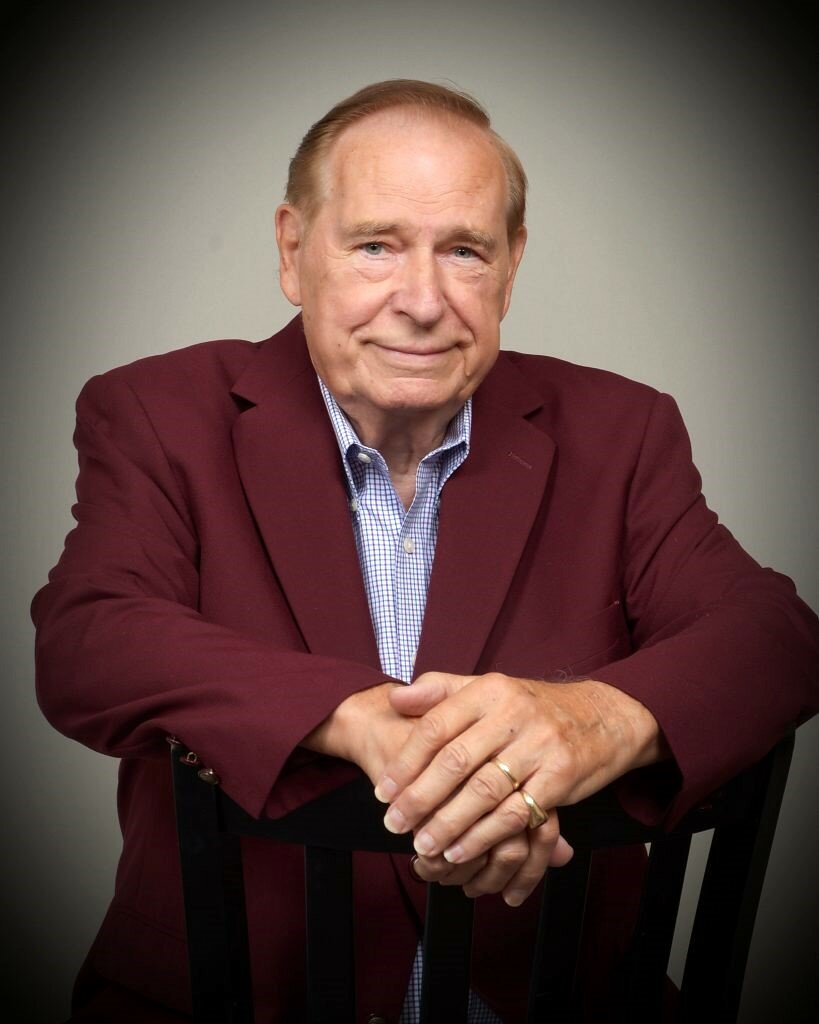
TR Harry is the pen name of a Scottsdale-based author who writes primarily about politics and religion on his blog. Please submit comments at yourvalley.net/letters or email them to AzOpinions@inusua.org. We are committed to publishing a wide variety of reader opinions, as long as they meet our Civility Guidelines.
Keywords
American democracy, liberal American democracy, strong middle class, big-tent party politics, America, World War II, WWII, neoliberalism, neoliberal trading order, World Trade Organization, North American Free Trade Agreement, free trade associations, WTO, NAFTA, FTAs, global commerce, political tensions, continental supply chains, political consequences, globalization, political backlash, U.S. Canada, Mexico, China, policymakers, geopolitical rivalry, organized wealth, ordinary citizens, wealth, worker discontent, organized wealth, big business, money, super PACs, trade policy, campaign finance, law, vote, politics, liberal democracy, rule of law, individualism, opportunity, rights, freedom, authority, liberalism, political unresponsiveness


